
26-June-2025 | Fitness & Exercise
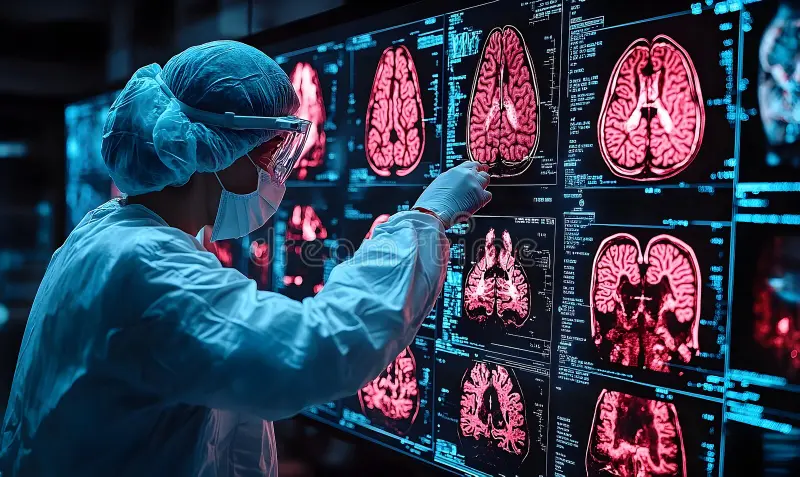
The use of AI in radiology has changed dramatically in the past few years, and the discussion for the upcoming years – 2025 – is not about the potential of AI to diagnose abnormalities on imaging. The bigger issue is whether or not these systems can operate reliably in real world clinical settings and if they can do so, whether they will increase diagnostic productivity while maintaining accuracy and certainty.
The initial research with AI and radiology was limited to curated, controlled datasets featuring highly specific imaging input. There is strong evidence for models that are highly sensitive in identifying conditions such as pulmonary nodules, intracranial hemorrhage, breast lesions, and stroke-related findings; however, this has proven much more difficult to translate into a routine clinical practice.
The current research is directed more and more towards the issue of validation, repeatability, integration of workflow and medico-legal accountability.
A significant change in the literature in recent years has been the change in focus from experimental accuracy studies to real-world implementation analysis.
The review, which appeared in Radiology in 2024, highlighted that AI models often fail to perform well when encountering external data from other institutions, populations, or imaging protocols. (rsna.org).
This effect, commonly known as “dataset shift,” is a significant problem in that many algorithms are developed using a small imaging pattern of demography or institution. Therefore, an AI system that is effective in one healthcare institution might not be as effective or accurate in another.
Recent conversations in radiology are now directed not just at point-in-time scores of accuracy but more toward the generalizability and consistency of the system in health care.
According to the U.S. Food and Drug Administration, the number of FDA-cleared AI-enabled medical imaging devices has increased substantially over recent years.
Most currently approved applications involve:
Rather than functioning independently, most of these tools are currently designed as assistive technologies aimed at improving efficiency and reducing interpretation delays.
In emergency radiology settings, AI-assisted triage systems have shown potential in accelerating identification of acute intracranial hemorrhage and large vessel occlusion, particularly during high-volume workflow periods.
However, experts continue emphasizing that AI systems remain dependent on clinician oversight, especially in complex or atypical presentations.
With the growing use of AI, there is also growing awareness of the risk of “automation bias.” A tendency to rely on algorithm-generated suggestions, which may lead clinicians to ignore conflicting information is called automation bias.
In recent editorials published in The BMJ and JAMA, there have been reports of the potential for new diagnostic problems if AI is used too much and clinicians are not as attentive to interpreting images. (bmj.com)
The transparency issue of deep learning systems is also being studied. Some AI models are said to be “black box” algorithms, so that a clinician may not fully comprehend how a specific outcome was concluded.
This poses further difficulties in the accountability aspect, particularly when there are discrepancies between the AI's interpretation and that of the radiologist.
One of the most important concerns in current AI research is algorithmic bias.
Studies suggest that models trained predominantly on imaging datasets from specific geographic or ethnic populations may demonstrate variable performance across diverse patient groups. Differences in scanner quality, imaging protocols, and disease prevalence can further affect reliability.
A recent Lancet Digital Health discussion also highlighted the importance of continuous post-deployment monitoring rather than relying solely on pre-approval validation studies. (thelancet.com)
This has led to increasing calls for:
Most current evidence suggests that AI is unlikely to replace radiologists in the foreseeable future. Instead, the technology is increasingly being viewed as a workflow augmentation tool capable of improving efficiency, prioritization, and diagnostic support.
The major focus moving forward will likely involve:
The discussion in 2025 is therefore becoming more clinically grounded. The question is no longer whether AI can detect abnormalities under ideal conditions, but whether it can safely and reliably support diagnostic decision-making across varied healthcare environments.
The application of AI in radiology is in a more advanced stage of clinical evaluation. Initial enthusiasm was primarily based on the accuracy of the algorithms, but current research increasingly focuses on reliability, bias, integration of workflow and patient safety.
The current trend is that AI could prove to be a valuable tool for radiologists when used as a clinician assistive tool, but there is a need for real-world testing, transparency, and oversight before it can be widely deployed without human intervention.
The Lancet Digital Health — AI Bias and Post-Deployment Monitoring
https://www.thelancet.com/journals/landig


Subscribe to out newsletter today to receive latest news administrate cost effective for tactical data.Subscribe to out newsletter today to receive latest news administrate cost effective for tactical data.
Faith Driven Healing Clinically Delivered.
Copyright © 2026 Sanova. All rights reserved Terms & Conditions Refund Policy